
Many people in North Carolina assume that everything they tell their attorney remains completely confidential. While attorney-client privilege protects most legal communications, it’s not absolute. Understanding the boundaries, exceptions, and how to preserve this privilege is essential when navigating sensitive family law matters like divorce, custody disputes, and alimony.
Table of Contents
- Understanding Attorney-Client Privilege In North Carolina
- Scope Of Attorney-Client Privilege In Family Law Cases
- Exceptions And Limitations To Attorney-Client Privilege
- How Attorney-Client Privilege Can Be Waived
- Common Misconceptions About Attorney-Client Privilege
- Practical Tips To Protect Your Privileged Communications
- Summary And Next Steps For North Carolina Family Law Clients
- Protect Your Rights With Expert North Carolina Family Law Attorneys
- Frequently Asked Questions
Key takeaways
| Point | Details |
|---|---|
| Attorney-client privilege protects confidential communications made for legal advice under North Carolina law. | Only conversations seeking or providing legal counsel are covered, not casual discussions. |
| Privilege extends to your legal team but can be lost if shared with unnecessary third parties. | Including paralegals and co-counsel is safe, but telling friends or family typically waives protection. |
| Crime-fraud exception removes privilege when advice facilitates wrongdoing or fraud. | Courts may also override privilege in cases involving child safety or abuse. |
| Voluntary disclosure or careless handling of communications can waive your privilege permanently. | Social media posts, public discussions, and unsecured emails are common causes of waiver. |
| Practical steps like private communication and confirming confidentiality help maintain privilege. | Always clarify with your attorney what information qualifies as privileged before sharing. |
Understanding attorney-client privilege in North Carolina
Attorney-client privilege is a legal rule that protects confidential communications between you and your attorney made for seeking or giving legal advice. It is codified under Rule 501 of the North Carolina Rules of Evidence. The purpose is to promote open and honest communication so lawyers can provide effective representation without fear that sensitive details will be disclosed.
Privilege applies only to communications intended to be confidential and related to legal advice. If you discuss non-legal matters or share information publicly, those conversations are not protected. It differs from attorney confidentiality, which is an ethical obligation broader than privilege. While confidentiality covers all client information, privilege specifically protects communications made for legal counsel and can be enforced in court.
Key features of attorney-client privilege include:
- Protection for private conversations seeking or providing legal advice
- Enforcement in court to prevent compelled testimony or disclosure
- Application to both oral and written communications
- Extension to your legal team, including paralegals and co-counsel
- Distinction from ethical confidentiality obligations
Understanding the role of your attorney in family law matters helps clarify which communications are protected. Privilege is designed to ensure you can share every relevant detail with your lawyer without worrying about public exposure. This foundation allows your attorney to develop effective strategies and provide sound advice tailored to your unique situation.
Scope of attorney-client privilege in family law cases
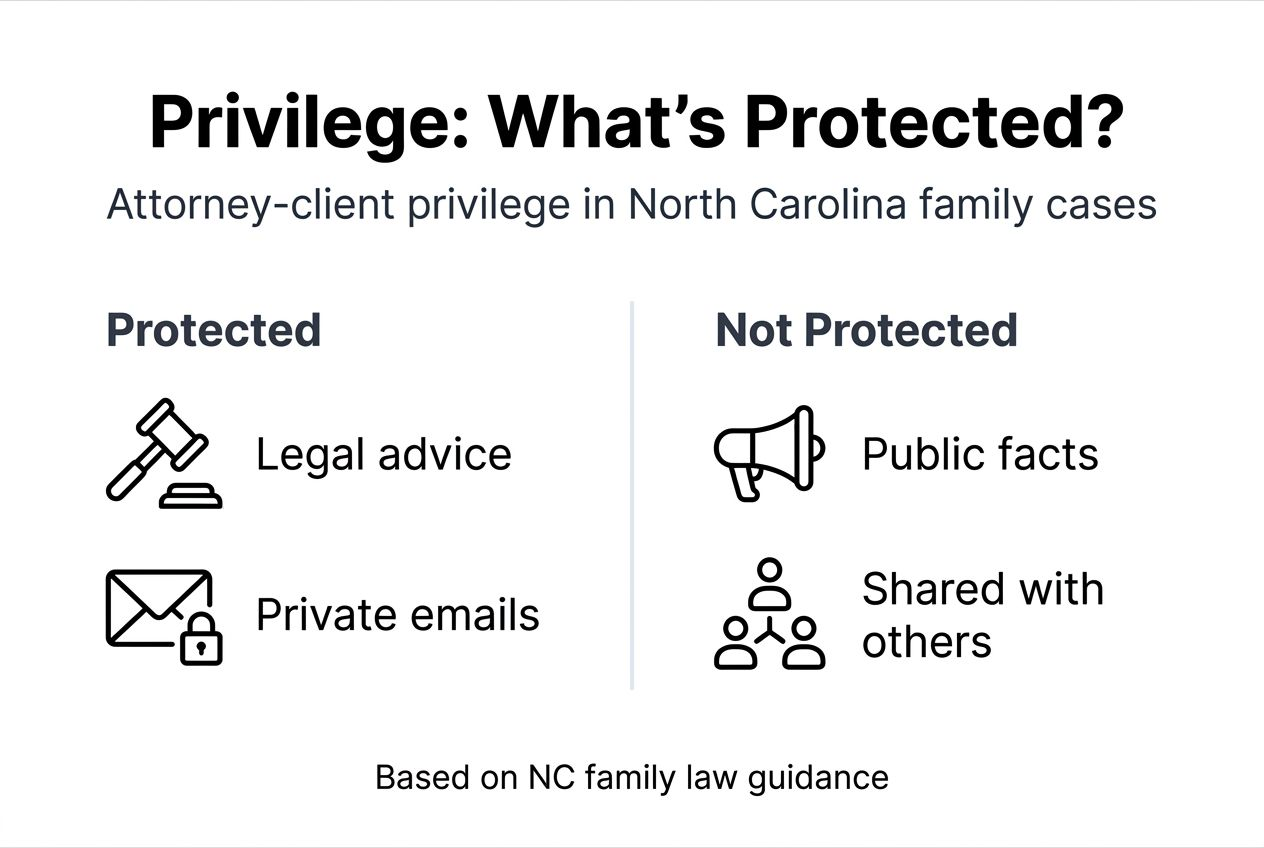
Privilege protects oral and written communications made privately with your lawyer related to family law legal advice. It extends to your legal team, including paralegals or co-counsel, when necessary for representation. Privilege lasts during and after representation until waived or overridden by exceptions. Communications involving court filings or legal strategies are covered, but non-legal advice conversations or public statements are not protected.
In family law cases such as divorce, custody disputes, and alimony proceedings, privilege covers:
- Discussions about case strategy, settlement options, and legal rights
- Written correspondence including emails, letters, and texts sent to your attorney
- Conversations with your legal team about evidence, witnesses, and court preparation
- Communications related to financial disclosures, custody arrangements, and property division
- Confidential meetings, phone calls, and video conferences with your lawyer
Privilege does not cover facts themselves, only the communications about those facts. For example, if you tell your attorney about marital assets, the existence of those assets is not privileged, but your discussion about legal strategies to divide them is. Understanding this distinction is critical when navigating divorce and separation in North Carolina.

The following table shows what is and is not protected:
| Protected | Not protected |
|---|---|
| Private emails to your attorney about custody strategy | Emails copied to friends or family members |
| Confidential meetings discussing settlement terms | Public statements about your case |
| Legal advice on property division | Casual conversations unrelated to legal advice |
| Strategy discussions with paralegals and co-counsel | Information shared on social media |
Pro Tip: Always confirm with your attorney that a communication is intended to be confidential before sharing sensitive information. This simple step can prevent unintended waiver and protect your privilege.
Exceptions and limitations to attorney-client privilege
While privilege is a powerful protection, it has important exceptions. The crime-fraud exception removes privilege if legal advice is sought to further a crime or fraud. Privilege does not cover communications shared with unnecessary third parties, which can waive protection. Courts may override privilege in family abuse cases or child safety matters, prioritizing protection of vulnerable individuals.
Voluntary disclosures or improper handling of communications may cause waiver. If you share privileged information with someone outside your legal team, you risk losing the protection entirely. This is especially relevant in emotionally charged family law cases where clients may feel compelled to discuss details with friends or relatives.
Key exceptions and limitations include:
- Crime-fraud exception when advice is used to commit or plan illegal acts
- Waiver by disclosing privileged information to third parties
- Court-ordered disclosure in cases involving child abuse or safety concerns
- Communications not intended to be confidential or made in the presence of others
- Public filings or statements that reveal privileged information
Understanding these exceptions helps you avoid common mistakes during divorce in NC and maintain the protections you need. For example, if you’re discussing child custody arrangements and share your attorney’s advice with your ex-spouse’s family, you may inadvertently waive privilege.
The following table compares attorney-client privilege with related legal concepts:
| Concept | Scope | Enforcement | Duration |
|---|---|---|---|
| Attorney-client privilege | Confidential communications for legal advice | Enforceable in court to prevent disclosure | Lasts until waived or exception applies |
| Attorney confidentiality | All client information, broader than privilege | Ethical obligation, not always court-enforceable | Continues indefinitely unless waived |
| Work-product doctrine | Attorney’s case preparation materials and strategies | Protects from discovery in litigation | Lasts during and after case conclusion |
Pro Tip: Never assume privilege is absolute. Consult your attorney before discussing your case with anyone, even family members you trust, to ensure you don’t inadvertently waive protection.
For more information about exceptions to privilege, review crime-fraud exception details from the American Bar Association.
How attorney-client privilege can be waived
Voluntary disclosure to third parties, including family or friends, usually waives privilege. Inadvertent disclosures, including email slips or unsecured communication, can also cause waiver. Posting case details or legal advice on social media is a frequent cause of privilege loss, as these platforms are public by nature.
Clients should use secure, private communication channels and avoid discussing cases in public settings. Even well-meaning conversations with loved ones can undermine your legal position if those individuals are later called to testify. Once privilege is waived, it’s often impossible to restore, making prevention essential.
Common ways privilege is waived include:
- Sharing your attorney’s advice with friends, family, or colleagues
- Discussing case details on social media platforms like Facebook or Twitter
- Sending emails to your attorney and copying unauthorized third parties
- Talking about your case in public places where others can overhear
- Failing to mark communications as confidential when necessary
Understanding the role of your attorney in family law matters helps you recognize when a communication should remain private. If you’re unsure whether sharing information will waive privilege, ask your lawyer before proceeding. This proactive approach can save you from costly mistakes that compromise your case.
To avoid common mistakes during divorce in NC, follow these guidelines:
- Use encrypted email or secure client portals for sensitive communications
- Avoid discussing your case on phone calls in public areas
- Never post about your legal proceedings on social media
- Confirm that all communications with your attorney are marked confidential
- Limit discussions to your attorney and authorized legal team members
Pro Tip: Always clarify confidentiality conditions when sharing information with anyone involved in your representation. If you need to discuss your case with a therapist, accountant, or other professional, ask your attorney how to preserve privilege while getting the support you need.
Common misconceptions about attorney-client privilege
Not all information shared with your attorney is privileged. Only legal advice communications are protected. Privilege lasts beyond representation but is not indefinite and can be lost by waiver or exceptions. Talking about your case with family or friends typically waives privilege, even if you ask them to keep it confidential.
Privilege does not cover casual conversations or communications intended for non-legal purposes. For example, if you discuss personal matters unrelated to your legal case during a meeting, those conversations are not protected. Understanding these misconceptions helps clients avoid unintended exposure and maintain the protections they need.
Common false beliefs include:
- Believing that everything you say to your attorney is automatically privileged
- Assuming privilege covers facts themselves, not just communications about facts
- Thinking privilege lasts forever regardless of your actions
- Believing that asking others to keep information secret preserves privilege
- Assuming privilege protects communications made in the presence of unnecessary third parties
Many clients mistakenly believe that because they trust a family member or friend, sharing privileged information won’t cause problems. In reality, once you disclose information to someone outside your legal team, courts generally consider privilege waived. This can happen even if the disclosure was unintentional or the third party promises not to repeat what they heard.
Another misconception is that privilege automatically applies to all documents you give your attorney. While communications seeking legal advice are protected, underlying facts and documents are not. For example, if you provide financial records to your lawyer, those records themselves are not privileged, but your discussion about how to use them in your case is.
Practical tips to protect your privileged communications
Protecting attorney-client privilege requires deliberate action, especially during stressful family law proceedings. Following these practical steps helps ensure your confidential communications remain protected and your legal position stays secure.
- Always conduct sensitive discussions in private with your attorney or authorized legal team members, never in public settings.
- Avoid mentioning case details on social media or public forums, even in private messages that could be shared.
- Use secure, private communication methods such as encrypted emails, secure client portals, or direct phone calls.
- Do not share privileged information with anyone outside your legal representation, including family members, without first consulting your attorney.
- Keep a record of confidential communications and confirm with your attorney that information will be kept privileged.
- Mark sensitive emails and documents as confidential to reinforce the expectation of privacy.
- Ask your attorney before involving any third party in discussions, even if they seem necessary for your case.
- Store legal documents securely and avoid leaving them where others can access them.
Pro Tip: Before sharing any information, pause to confirm it qualifies as legal advice to be protected. If you’re unsure, ask your attorney directly rather than assuming privilege applies. This simple habit can prevent costly mistakes that undermine your case.
Summary and next steps for North Carolina family law clients
Attorney-client privilege is key to safeguarding honest communication and legal strategy in family law. Understanding the limits, exceptions, and how waiver can occur helps you prevent unintended loss of privilege. Keep all legal communications confidential and consult your attorney before sharing information with anyone outside your legal team.
Engaging a qualified North Carolina family law attorney ensures your rights and communications remain protected throughout divorce, custody, and alimony proceedings. Proactively protecting privilege contributes to fair and effective legal outcomes. By following the practical tips outlined above, you can maintain the confidentiality necessary for your attorney to provide the best possible representation.
Key points to remember:
- Privilege protects confidential communications made for legal advice under North Carolina law
- Crime-fraud exception and voluntary disclosure can remove or waive privilege
- Sharing information with third parties, posting on social media, or discussing your case publicly typically waives privilege
- Use secure communication channels and confirm confidentiality before sharing sensitive information
- Consult your attorney whenever you’re unsure whether an action might compromise privilege
Taking these steps positions you to navigate family law proceedings with confidence, knowing your sensitive communications remain protected. Your attorney can provide personalized guidance based on your specific situation to ensure privilege is maintained throughout your case.
Protect your rights with expert North Carolina family law attorneys
Navigating attorney-client privilege requires trusted legal guidance. King & Rowe’s experienced divorce and family law attorneys understand the complexities of protecting confidential communications in North Carolina. We help you safeguard your rights throughout divorce, custody, and alimony cases with personalized legal support that prioritizes your privacy and legal interests.

Our team has successfully handled over 1500 cases across Catawba, Burke, and Caldwell counties, combining aggressive advocacy with deep knowledge of regional courts and judges. Whether you need guidance on maintaining privilege during emotional proceedings or comprehensive representation in complex family law matters, we’re here to help. We also provide estate planning attorneys and resources like our ultimate guide to wills to secure your family’s future. Contact our trusted attorneys today to protect your rights and secure effective representation in your family law case.
Frequently asked questions
What types of communications are protected by attorney-client privilege in North Carolina?
Privilege protects confidential oral and written communications between you and your attorney made for seeking or providing legal advice. This includes emails, letters, phone calls, and in-person meetings where you discuss legal strategy, case options, or your rights. Casual conversations unrelated to legal advice and communications shared with third parties are not protected.
Can I lose attorney-client privilege by talking about my case on social media?
Yes, posting case details or your attorney’s advice on social media typically waives privilege. Social media platforms are public, and courts generally view such disclosures as voluntary waivers. Even private messages can be shared or disclosed, so avoid discussing your case online entirely to maintain privilege.
Does attorney-client privilege cover communications with my attorney’s paralegal or legal assistant?
Yes, privilege extends to your attorney’s legal team, including paralegals, legal assistants, and co-counsel, when their involvement is necessary for your representation. However, sharing information with administrative staff or others outside the legal team may not be protected, so always confirm with your attorney.
What is the crime-fraud exception to attorney-client privilege?
The crime-fraud exception removes privilege when legal advice is sought to commit or further a crime or fraud. If a court finds that you consulted your attorney to facilitate illegal activity, those communications are not protected and can be disclosed. This exception ensures privilege is not used to enable wrongdoing.
How long does attorney-client privilege last in North Carolina family law cases?
Privilege generally lasts during and after your representation unless you waive it or an exception applies. Even after your case concludes, your attorney cannot disclose privileged communications without your consent. However, voluntary disclosure to third parties or other actions can permanently waive privilege at any time.
Recommended
- Understanding a Family Consent Order in North Carolina – Hickory Attorneys for Family Law, Criminal Defense, & Estate Planning | King & Rowe
- The Legal Risks of “Doing It Yourself” in Family Law Cases in NC – Hickory Attorneys for Family Law, Criminal Defense, & Estate Planning | King & Rowe
- Role of Attorney in Family Law – Protecting Rights in Divorce
- Ultimate Guide to Child Custody – #1 Rated Hickory Attorneys for Family Law, Criminal Defense, & Estate Planning | King & Rowe