
Many parents mistakenly believe visitation rights are the same as custody, but they serve a distinct legal purpose. Visitation rights ensure ongoing parent-child contact after separation or divorce, preserving these critical relationships even when one parent lacks primary custody. Understanding how North Carolina courts determine visitation, the benefits for your child, and the legal processes involved empowers you to protect your parental role. This guide breaks down the legal framework, court considerations, common challenges, and actionable steps to secure meaningful time with your child.
Table of Contents
- Understanding Visitation Rights In North Carolina
- Legal Framework And Importance Of Visitation
- Court Considerations In Visitation Decisions
- Benefits Of Pursuing Visitation Rights
- Challenges And Limitations In Visitation Rights
- Common Misconceptions About Visitation Rights
- Practical Steps To Pursue Visitation Rights In North Carolina
- Protect Your Visitation Rights With Expert Legal Support
- Frequently Asked Questions About Visitation Rights In North Carolina
Key takeaways
| Point | Details |
|---|---|
| Visitation ensures parenting time | Courts grant visitation to maintain parent-child contact regardless of custody arrangements. |
| Child’s best interests guide decisions | North Carolina courts prioritize child safety and well-being when determining visitation schedules. |
| Visitation supports emotional health | Regular contact with both parents improves children’s psychological adjustment and stability after separation. |
| Supervised visits protect safety | Courts may order oversight when concerns exist, allowing contact while safeguarding the child. |
| Legal remedies enforce orders | Parents can pursue court enforcement if visitation rights are violated or denied improperly. |
Understanding visitation rights in North Carolina
Visitation rights grant non-custodial parents court-ordered time with their children. Unlike custody, visitation focuses solely on physical parenting time, not decision-making authority. North Carolina family law recognizes two custody types: legal custody (the power to make major decisions about education, healthcare, and religion) and physical custody (where the child lives primarily). Visitation exists separately, ensuring the non-custodial parent maintains regular contact.
The distinction between legal custody, physical custody, and visitation forms the foundation of how courts allocate parental responsibilities. Legal custody determines who decides on schooling or medical treatment. Physical custody establishes the child’s primary residence. Visitation provides structured time for the other parent to stay involved in daily life, attend activities, and nurture the relationship.
North Carolina courts apply the best interests standard when setting visitation terms. This principle prioritizes the child’s safety, emotional needs, and stability above all else. Courts examine multiple factors to determine visitation arrangements that promote healthy development while protecting against harm.
Visitation types vary based on circumstances:
- Unsupervised visitation: The parent spends time alone with the child without oversight, typical when no safety concerns exist.
- Supervised visitation: A third party monitors interactions when courts identify risks like substance abuse or domestic violence history.
- Liberal visitation: Flexible schedules allowing parents to arrange time cooperatively without rigid court-imposed rules.
Visitation serves as a legal safeguard, ensuring children maintain bonds with both parents. Even when one parent holds primary custody, visitation preserves the non-custodial parent’s active presence in their child’s life, supporting continuity and emotional security.
Legal framework and importance of visitation
North Carolina law presumes visitation benefits children unless compelling evidence shows it would harm their welfare. This legal preference reflects decades of research demonstrating that ongoing contact with both parents strengthens children’s adjustment after separation. Courts encourage joint custody arrangements with visitation whenever possible, recognizing that shared parenting time fosters healthier outcomes.
Visitation rights support children’s emotional and psychological health by ensuring ongoing contact with both parents, which positively impacts adjustment after divorce. Children who maintain regular visits with both parents typically show better emotional regulation, fewer behavioral problems, and stronger academic performance. The consistency of seeing both parents reinforces their sense of security and identity during a turbulent transition.
Courts favor visitation arrangements that allow children to experience both parents’ love, guidance, and involvement. This approach protects the child’s relationship with each parent, acknowledging that both play irreplaceable roles. Even when parents cannot cooperate easily, structured visitation schedules create predictability and routine that help children adapt.
Visitation also serves as a protective mechanism aligned with the child’s best interests. By establishing clear expectations and accountability, court-ordered visitation prevents one parent from unilaterally cutting off contact. It reinforces the legal principle that children deserve relationships with both parents unless safety risks demand otherwise.
Key benefits driving NC’s visitation priority include:
- Maintaining emotional bonds that provide children with stability and reassurance.
- Ensuring non-custodial parents remain active participants in their child’s upbringing.
- Supporting children’s long-term development by preserving dual parental influence.
- Reducing conflict by providing clear, enforceable schedules that limit disputes.
Visitation rights reflect North Carolina’s commitment to balancing parental involvement with child protection. The legal framework exists to serve the child first, recognizing that sustained contact with loving parents forms the bedrock of healthy development.
Court considerations in visitation decisions
When determining visitation rights, North Carolina courts consider the child’s safety, the quality of the parent-child relationship, and the ability of each parent to provide a stable environment. Judges wield significant discretion, evaluating each case individually to craft arrangements serving the child’s best interests. No single factor controls the outcome; courts weigh multiple elements collectively.
Factors courts assess include:
- Child safety: Any history of abuse, neglect, domestic violence, or behavior endangering the child’s physical or emotional well-being.
- Substance abuse: Evidence of drug or alcohol dependency that impairs parenting capacity or creates risks during visitation.
- Mental health: Psychological conditions affecting the parent’s ability to provide appropriate care and supervision.
- Parental conduct: Stability in living arrangements, employment, and overall lifestyle that impacts the child’s environment.
- Relationship quality: The existing bond between parent and child, including the parent’s involvement before separation.
Courts can grant unrestricted visitation, impose limitations, or deny visitation entirely based on these evaluations. When safety concerns exist but aren’t severe enough to eliminate contact, judges often order supervised visitation. This arrangement allows the parent and child to maintain their relationship under professional oversight, protecting the child while preserving the bond.
Documentation and evidence play critical roles in visitation hearings. Parents seeking to establish or modify visitation should gather records of their involvement, character references, and proof of stable circumstances. Conversely, parents opposing visitation must present credible evidence of risks, such as police reports, medical records, or witness testimony.
Courts prioritize demonstrated risks over speculation. Mere allegations without supporting proof rarely justify denying visitation. Judges expect concrete evidence showing how visitation would harm the child’s welfare, applying a high standard to protect parental rights while safeguarding children.
Pro Tip: Keep detailed records of all interactions with your child, including attendance at school events, medical appointments, and extracurricular activities. This documentation strengthens your case by demonstrating consistent, positive involvement.
Benefits of pursuing visitation rights
Visitation rights support children’s emotional and psychological health by ensuring ongoing contact that stabilizes their adjustment post-separation. Children need both parents’ presence to feel secure and valued. Regular visitation provides continuity, reinforcing that divorce or separation doesn’t erase parental love or commitment.

Maintaining consistent visitation helps non-custodial parents sustain strong long-term parenting relationships and positively influence their child’s development. When parents stay actively involved through visitation, children benefit from diverse perspectives, guidance, and emotional support. This dual influence enriches their growth, providing balanced insights and nurturing different aspects of their personality.
Visitation delivers tangible benefits:
- Emotional stability: Children who see both parents regularly experience less anxiety and depression, knowing both remain committed.
- Behavioral improvement: Regular contact reduces acting out, as children feel less abandoned and more secure in both parents’ care.
- Academic success: Parental involvement through visitation correlates with better school performance and engagement.
- Identity formation: Ongoing relationships with both parents help children understand their heritage, values, and sense of self.
“Children thrive when they maintain meaningful relationships with both parents. Visitation isn’t just about time; it’s about preserving the emotional connections that shape who they become.”
Visitation also empowers non-custodial parents to remain informed and involved in crucial aspects of their child’s life. Attending school functions, doctor visits, and extracurriculars during visitation keeps parents connected to milestones and challenges. This involvement strengthens the parent-child bond and ensures the child feels supported from both sides.
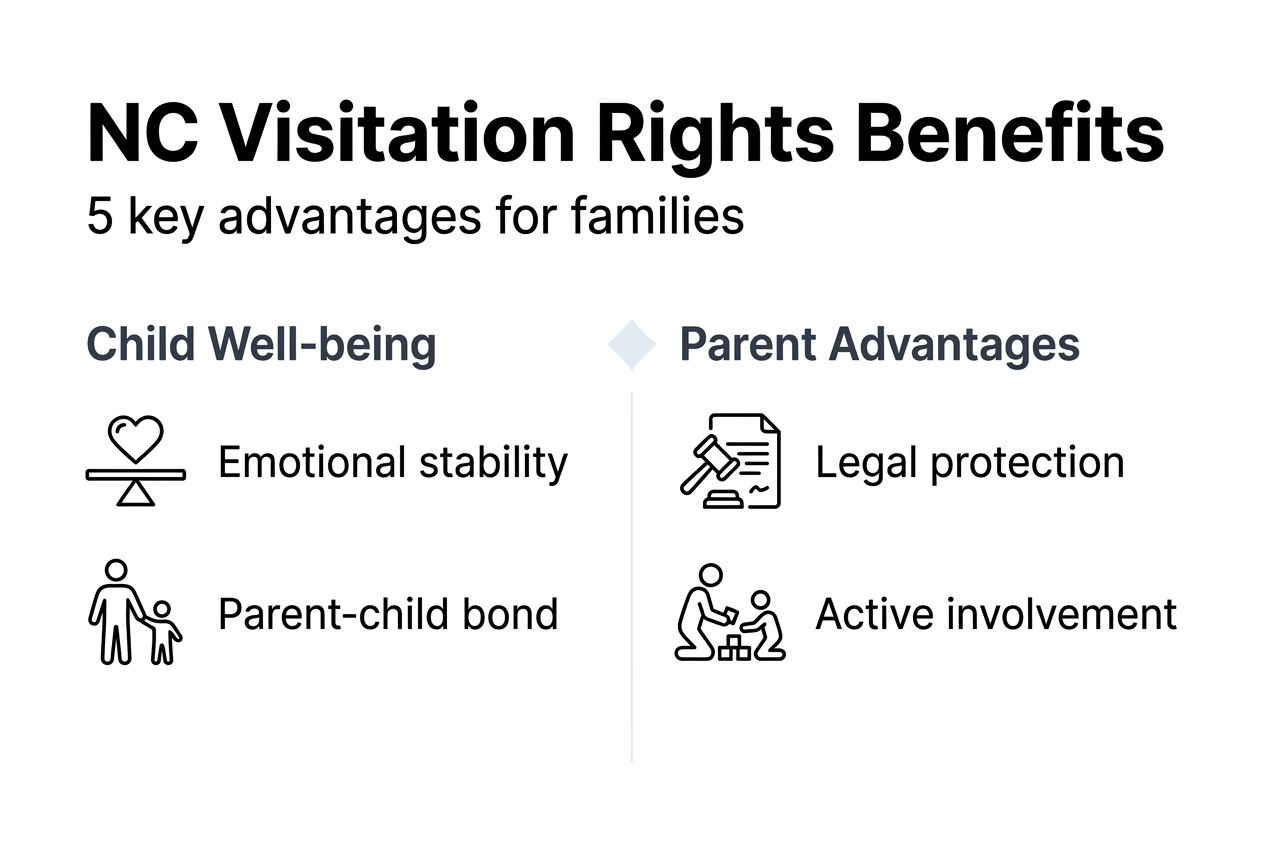
Research consistently shows that children benefit when both parents actively participate in their upbringing. Visitation rights formalize this participation, creating legal protections that prevent one parent from excluding the other. By securing visitation, you invest in your child’s long-term well-being and your enduring role in their life.
Challenges and limitations in visitation rights
Visitation rights can be denied or limited if credible evidence shows visitation would place the child at risk of abuse, neglect, or emotional harm. Courts prioritize child safety above parental access. When substantial risks exist, judges may restrict visitation or eliminate it entirely until circumstances improve.
Common reasons for visitation denial or limitation include:
- Physical or sexual abuse: Documented incidents or credible allegations that the parent harmed the child.
- Neglect: Failure to provide basic care, supervision, or a safe environment during previous parenting time.
- Domestic violence: History of violence in the home, even if not directed at the child, creating traumatic exposure.
- Substance misuse: Active addiction or intoxication during visitation that endangers the child’s safety.
- Mental health crises: Untreated conditions that impair judgment or create dangerous situations for the child.
Supervised visitation serves as a safety measure when courts find risks but want to preserve some parent-child contact. A neutral third party, such as a professional supervisor or trusted family member, monitors visits to ensure the child’s protection. This arrangement allows the relationship to continue under safeguards, often with goals for transitioning to unsupervised visits if the parent addresses concerns.
| Aspect | Supervised Visitation | Unsupervised Visitation |
|---|---|---|
| Oversight | Third party present at all times | Parent and child alone |
| Location | Designated facility or public space | Parent’s home or chosen venue |
| Duration | Shorter, structured time blocks | Flexible, extended periods |
| Purpose | Protect child while maintaining contact | Normal parenting time without restrictions |
| Conditions | Parent must demonstrate safety improvements | No special requirements beyond court order |
Courts weigh safety above parental rights when conflicts arise. If a parent poses genuine risks, the child’s welfare takes precedence. However, judges don’t deny visitation lightly; they require substantial proof that contact would harm the child. Unsubstantiated claims or minor concerns typically don’t justify eliminating visitation.
Pro Tip: If you’re subject to supervised visitation, cooperate fully with supervisors and follow all court-ordered conditions. Demonstrating compliance and addressing safety concerns improves your chances of transitioning to unsupervised visits over time.
Common misconceptions about visitation rights
Many parents entering custody disputes hold inaccurate beliefs about what visitation rights entail. Clearing up these misconceptions helps set realistic expectations and prevents costly legal missteps.
- Visitation grants legal custody or decision-making authority. False. Visitation only provides physical parenting time. Legal custody, which covers major decisions about education, healthcare, and religion, remains separate. Holding visitation rights doesn’t give you input on these choices unless you also hold legal custody.
- Visitation schedules are permanent and unchangeable. False. Courts can modify visitation orders when circumstances change or the child’s needs evolve. Either parent can petition for modifications by demonstrating that the current arrangement no longer serves the child’s best interests. Changes in work schedules, relocation, or safety concerns can all justify revisiting visitation terms.
- Visitation rights automatically include access to school and medical records. False. Only custodial parents typically receive direct access to educational and health information. Non-custodial parents with visitation may request access, but this depends on state law and the custody order’s specific terms. Check your custody agreement to understand what rights you hold beyond physical visitation time.
- If I have visitation, I can refuse to pay child support. False. Visitation and child support are separate legal obligations. Courts treat them independently; you cannot withhold support because visitation is denied, nor can the other parent deny visitation for unpaid support. Violating either obligation creates separate legal consequences.
Pro Tip: Consult an experienced family law attorney to understand your specific rights and limitations under your custody order. Professional guidance prevents misunderstandings that could harm your case or relationship with your child.
Practical steps to pursue visitation rights in North Carolina
Securing visitation rights requires following North Carolina’s legal procedures. Taking systematic, documented steps strengthens your position and demonstrates your commitment to maintaining a relationship with your child.
- File a visitation petition with family court. If no custody order exists, you must petition the court for visitation rights. Submit the required paperwork to the family court in the county where your child resides. The petition should clearly state your relationship to the child and request specific visitation terms.
- Engage in mediation or court hearings. North Carolina often requires mediation before proceeding to trial. Mediation provides an opportunity to negotiate visitation schedules cooperatively, focusing on the child’s best interests. If mediation fails, a judge will hold a hearing, review evidence, and issue a visitation order based on the child’s welfare.
- Consider supervised visitation if safety concerns exist. If allegations or past incidents raise questions about your fitness, propose supervised visitation as a starting point. This shows willingness to prioritize the child’s safety while maintaining contact. Cooperating with supervision requirements can eventually lead to unsupervised visits as you address concerns.
- Use legal enforcement tools for violations. If the custodial parent denies court-ordered visitation, you can file a motion for contempt. Courts take violations seriously and may impose penalties, modify custody, or adjust visitation to ensure compliance. Document every denied visit with dates, times, and communications to support your enforcement action.
- Gather documentation and evidence. Maintain records of your involvement, including texts, emails, attendance at school events, and financial support. Positive evidence strengthens your case, showing you’re a responsible, engaged parent deserving regular visitation time.
- Explore related legal options. Understanding family consent orders can provide flexible agreements if both parents cooperate. Additionally, grandparents may pursue visitation rights under certain circumstances, expanding family connections for your child’s benefit.
Navigating visitation processes in NC demands persistence and attention to legal detail. Professional legal support ensures you meet procedural requirements, present compelling evidence, and advocate effectively for your parental time.
Protect your visitation rights with expert legal support
Securing meaningful time with your child after separation requires more than understanding the law. It demands strategic advocacy, persuasive evidence, and experienced representation. King & Rowe’s family law team brings deep knowledge of North Carolina courts, judges, and procedures to protect your visitation rights and strengthen your parent-child relationship.

Whether you’re establishing initial visitation, modifying existing orders, or enforcing violated rights, our attorneys provide personalized guidance tailored to your situation. We handle mediation, litigation, and enforcement actions with the aggressive advocacy needed to achieve results. Hiring a family law firm ensures you have skilled counsel navigating complex court processes while you focus on your child.
Our team understands the nuances of mediation versus litigation in family law, helping you choose the approach that best serves your goals. We’ve supported over 1500 families across Catawba, Burke, and Caldwell counties, building a reputation for integrity and results. Contact King & Rowe’s family law attorneys today to discuss your visitation case and take the first step toward protecting your parental role.
Frequently asked questions about visitation rights in North Carolina
What is the difference between visitation and custody?
Custody determines who makes major decisions (legal custody) and where the child lives (physical custody). Visitation grants the non-custodial parent scheduled time with the child but doesn’t include decision-making authority or the right to determine the child’s primary residence.
Can visitation orders be changed after they are set?
Yes. Either parent can petition the court to modify visitation orders if circumstances change or the current arrangement no longer serves the child’s best interests. You must demonstrate that modification benefits the child to succeed.
What happens if the other parent denies my visitation time?
You can file a motion for contempt with the family court. Document every denied visit with dates, times, and communications. Courts may impose penalties on the violating parent, modify custody arrangements, or adjust visitation schedules to enforce compliance.
When is supervised visitation used?
Courts order supervised visitation when safety concerns exist, such as substance abuse, domestic violence history, or mental health issues. A neutral third party monitors visits to protect the child while preserving contact. Supervision continues until the parent addresses the concerns.
Do parents with visitation rights have a say in their child’s education?
Not automatically. Legal custody controls educational decisions. Visitation only grants physical parenting time. If you want input on schooling, you must seek shared legal custody through the court or negotiate it in your custody agreement.
Recommended
- Do Grandparents Have Visitation Rights in North Carolina? – Hickory Attorneys for Family Law, Criminal Defense, & Estate Planning | King & Rowe
- Parental Rights in NC: Protecting Your Role as Parent
- 7 Essential Family Law Tips for North Carolina Parents
- 6 Winning Child Custody Tips for Divorced Parents