
Separation can bring a wave of uncertainty, especially when facing child custody and alimony questions in North Carolina. With so much at stake for your family, finding the right attorney in Hickory or Newton is more than choosing a legal partner—it is about securing guidance that balances your needs and your children’s well-being. Family law attorneys do more than argue in court; they act as strategic allies who offer compassionate counsel and help you make informed decisions throughout difficult transitions.
Table of Contents
- Defining The Role Of A Family Law Attorney
- Types Of Family Law Representation Services
- Attorney Responsibilities In Divorce And Custody Cases
- Navigating North Carolina Family Law Procedures
- Risks And Costs Of Self-Representation
Key Takeaways
| Point | Details |
|---|---|
| Role of Family Law Attorneys | Family law attorneys provide comprehensive legal guidance, advocate for client rights, and facilitate peaceful resolutions in familial disputes. |
| Types of Representation | Family law services include divorce representation, child custody advocacy, mediation, and more, tailoring support to individual family needs. |
| Navigating Legal Procedures | Understanding specific state laws, such as those in North Carolina, is crucial for effective navigation of family law and divorce processes. |
| Risks of Self-Representation | Self-representation in family law can lead to increased risks, including procedural mistakes and unfavorable outcomes, making legal guidance essential. |
Defining the Role of a Family Law Attorney
A family law attorney serves as a critical legal professional specializing in navigating complex legal matters involving familial relationships, particularly during emotionally challenging life transitions like divorce. These legal professionals do far more than simply represent clients in court – they act as strategic advisors, mediators, and advocates who protect individual rights while promoting constructive resolutions.
In family law disputes, attorneys play a multifaceted role that extends well beyond traditional litigation. Lawyers guide parties towards peaceful resolution, particularly in sensitive contexts involving family dynamics. Their responsibilities include:
- Providing comprehensive legal guidance
- Protecting client rights and interests
- Facilitating negotiations and mediation
- Representing clients in court proceedings
- Ensuring fair distribution of assets
- Advocating for child custody arrangements
- Developing strategic legal approaches
Unlike other legal practice areas, family law attorneys must balance zealous advocacy with ethical responsibilities to minimize conflict. Family law regulates family relationships by supporting better-informed and anticipatory relationship management, making legal processes more accessible and constructive.
Pro Tip: Research potential attorneys thoroughly, prioritizing those with demonstrated experience in collaborative dispute resolution and compassionate client communication.
Types of Family Law Representation Services
Family law representation encompasses a diverse range of legal services designed to address the complex emotional and legal challenges surrounding familial relationships. These services go beyond traditional courtroom representation, offering comprehensive support through various legal approaches tailored to individual family dynamics and specific legal needs.
The primary types of family law representation services include:
- Divorce Representation
- Child Custody Advocacy
- Mediation Services
- Domestic Violence Protection
- Adoption Legal Support
- Spousal Support Negotiation
- Property Division Assistance
Children’s representation in family law requires specialized legal services that ensure children’s perspectives are heard and their rights are protected during legal proceedings. This approach emphasizes the importance of considering children’s views and welfare in family law matters.
Each representation service is strategically designed to provide personalized legal support. For instance, divorce representation might involve negotiating asset division, while child custody advocacy focuses on establishing arrangements that prioritize the child’s best interests. Why Hire a Family Law Firm for Divorce becomes crucial when navigating these complex legal landscapes that require nuanced understanding of both legal statutes and human dynamics.
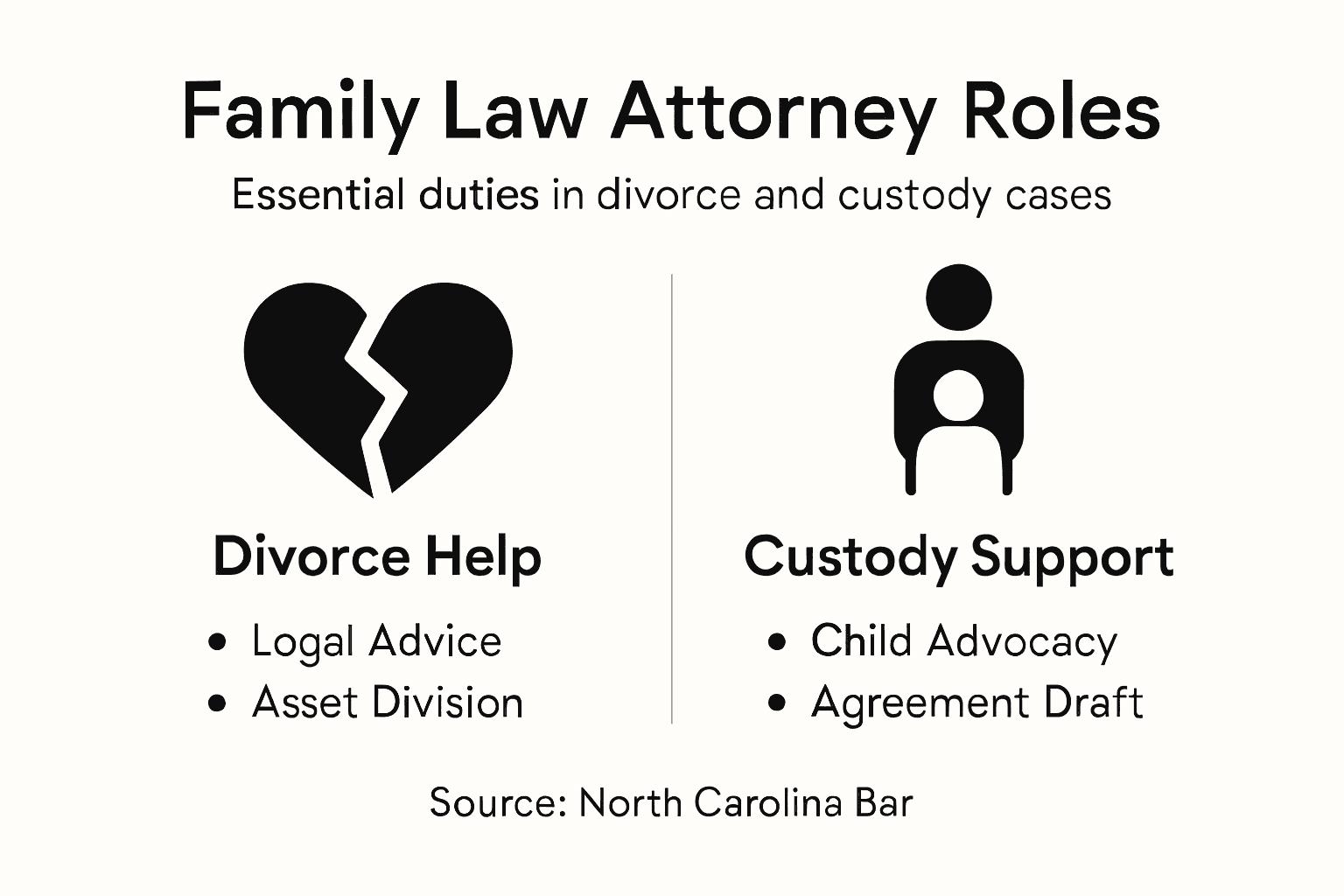
Pro Tip: Consult with multiple family law attorneys to find a professional whose approach aligns with your specific emotional and legal needs, ensuring comprehensive and compassionate representation.
Here’s how representation options in family law differ:
| Representation Type | Typical Benefit | Main Limitation |
|---|---|---|
| Attorney-Led | Strong legal guidance | Higher cost |
| Mediation | Collaborative solutions | May need lawyer review |
| Self-Representation | Lower upfront expense | Increased risk of error |
| Collaborative Law | Focuses on low conflict | May require compromise |
Attorney Responsibilities in Divorce and Custody Cases
Divorce and custody cases represent some of the most emotionally complex legal challenges attorneys encounter, requiring a delicate balance of legal expertise and compassionate guidance. Family law attorneys must navigate intricate legal landscapes while providing strategic support that protects their clients’ interests and promotes constructive resolutions.
Family law attorneys manage sensitive legal issues through comprehensive professional responsibilities, which include:
- Providing objective legal counsel
- Representing clients in court proceedings
- Drafting and reviewing legal agreements
- Negotiating fair settlements
- Protecting children’s best interests
- Managing complex asset division
- Offering emotional support and guidance
The multifaceted role of a family law attorney extends far beyond traditional legal representation. Family law attorneys serve multiple strategic roles including legal advocacy, case planning, and emotional support. They must effectively communicate complex legal concepts while maintaining sensitivity to the emotional dynamics of family disputes.

Navigating How is Child Custody Determined requires attorneys to thoroughly assess family circumstances, evaluate each parent’s capabilities, and develop recommendations that prioritize the child’s welfare. This process demands extensive legal knowledge, psychological insight, and a commitment to achieving the most constructive outcome for all parties involved.
Pro Tip: Document every interaction and communication during your legal proceedings, as detailed records can provide critical support for your attorney’s strategic approach.
Navigating North Carolina Family Law Procedures
North Carolina’s family law landscape presents unique challenges and specific procedural requirements that demand careful navigation. Divorce proceedings in this state follow distinctive legal protocols that differ significantly from other jurisdictions, requiring specialized understanding and strategic preparation.
North Carolina divorce law requires specific prerequisites for initiating legal separation, including:
- Minimum six-month residency for one spouse
- Mandatory one-year separation before filing
- No-fault divorce system implementation
- Equitable property distribution standards
- Comprehensive documentation requirements
- Strict adherence to state-specific legal timelines
- Detailed asset and support documentation
The state’s legal framework emphasizes constructive resolution and fair treatment. Common mistakes to avoid during divorce can significantly impact case outcomes, making professional legal guidance crucial. Understanding these nuanced procedures helps individuals protect their rights and navigate complex legal terrain more effectively.
Particularly challenging scenarios, such as when a spouse won’t sign divorce papers, require strategic legal intervention. North Carolina law provides specific mechanisms for proceeding even when one party is uncooperative, ensuring that legal processes can move forward despite potential obstacles.
Pro Tip: Compile a comprehensive financial inventory before initiating divorce proceedings, as detailed documentation can streamline legal processes and strengthen your negotiating position.
Below is a quick summary of unique aspects of North Carolina family law:
| Key Aspect | North Carolina Specifics | Impact on Case |
|---|---|---|
| Divorce Wait Period | One year separation required | Delays case initiation |
| Asset Division | Equitable distribution standard | May not result in 50/50 split |
| Uncooperative Spouse | Can still proceed legally | Ensures process continues |
| Documentation | Comprehensive financial records needed | Adds to preparation time |
Risks and Costs of Self-Representation
Navigating family law proceedings without professional legal representation can be a perilous journey fraught with complex legal challenges and potential long-term consequences. Self-representation might seem cost-effective initially, but the hidden risks and potential financial repercussions can far outweigh any perceived savings.
Self-representation in family law is increasingly common due to high legal costs, but litigants often encounter significant obstacles, including:
- Higher probability of procedural mistakes
- Increased likelihood of unfavorable outcomes
- Extended case duration
- Complicated legal documentation challenges
- Limited understanding of legal nuances
- Potential financial miscalculations
- Emotional stress and decision-making complications
The legal landscape for self-represented litigants presents substantial challenges. Rise of self-represented litigants has created systemic pressures, with courts struggling to manage cases where individuals lack professional legal expertise. This trend raises critical concerns about maintaining fair and efficient legal proceedings.
Particularly in family law, where stakes involve child custody, asset division, and long-term financial implications, professional legal guidance becomes crucial. The complexity of legal procedures, intricate documentation requirements, and emotional dynamics make self-representation a high-risk strategy that can potentially compromise one’s legal rights and future stability.
Pro Tip: Invest in at least one comprehensive consultation with a family law attorney, even if you plan to represent yourself, to understand potential legal pitfalls and strategic considerations.
Protect Your Family Rights with Expert Legal Guidance
Divorce and child custody matters demand more than just legal knowledge. They require a compassionate attorney who understands the emotional challenges and legal complexities involved in protecting your rights. This article highlights key roles such as strategic legal counseling, child custody advocacy, and navigating North Carolina-specific family law procedures. If you are facing divorce or custody challenges, relying on an experienced family law attorney can help you avoid costly mistakes, ensure your interests are protected, and promote fair resolutions.

Take control of your family law case today with trusted professionals who know the unique dynamics of North Carolina family law. At King & Rowe, our dedicated team offers personalized support tailored to your situation. Whether you need help with child custody, asset division, or understanding legal procedures, we stand ready to provide the guidance and advocacy you deserve. Do not face these challenges alone—visit King & Rowe family law services now to schedule your consultation and protect your future.
Frequently Asked Questions
What is the role of a family law attorney in divorce cases?
A family law attorney plays a crucial role in divorce cases by providing legal guidance, representing clients in court, negotiating settlements, and protecting the rights and interests of individuals during the complex divorce process.
How can a family law attorney assist with child custody agreements?
A family law attorney assists with child custody agreements by advocating for the child’s best interests, negotiating arrangements, and ensuring that the legal rights of both parents are respected throughout the custody process.
What are the risks of self-representation in family law cases?
Self-representation in family law cases can lead to procedural mistakes, unfavorable outcomes, and increased emotional stress, as individuals may lack the necessary legal knowledge and skills to navigate the complexities of family law.
Why is mediation beneficial in family law disputes?
Mediation is beneficial in family law disputes as it promotes collaboration between parties, reduces conflict, and often results in more satisfactory outcomes for both sides while preserving relationship dynamics, especially when children are involved.
Contact King & Rowe Attorneys at Law
 Serving Hickory, NC and surrounding communities
 Phone: 828-466-3858
 Email: kingrowelaw@gmail.com
 Website: www.kingrowelaw.com
Recommended
- Why Hire a Family Law Firm for Divorce
- Mediation vs. Litigation in Family Law: Which Is Right for You? – Hickory Attorneys for Family Law, Criminal Defense, & Estate Planning | King & Rowe
- 7 Essential Steps in a Divorce Checklist for Attorneys
- My Spouse Just Asked for a Divorce – What Do I Do Now? – Hickory Attorneys for Family Law, Criminal Defense, & Estate Planning | King & Rowe
- What Is Family Court in UAE – Key Facts for Expats