
Facing a criminal charge can leave you confused and anxious, especially when your future is at stake in Catawba, Burke, or Caldwell County. The law is not always clear, and the courtroom process can seem intimidating without the right guidance. Understanding the critical role of a criminal defense attorney gives you the best chance to protect your rights and make informed choices about your case.
Table of Contents
- Defining The Role Of Criminal Defense Attorney
- Types Of Criminal Cases And Legal Strategies
- North Carolina Laws And Legal Process
- Core Responsibilities And Client Advocacy
- Risks, Costs, And Common Misconceptions
Key Takeaways
| Point | Details |
|---|---|
| Role of Defense Attorney | A Criminal Defense Attorney represents clients facing criminal charges, ensuring protection of rights and preparation of tailored defense strategies. |
| Types of Attorneys | Choose between Public Defenders and Private Attorneys based on your financial situation and case complexity; private attorneys typically offer more personalized service. |
| Understanding Criminal Cases | Awareness of the specific type of charge (DUI, theft, etc.) is crucial, as it significantly influences legal strategies and potential outcomes. |
| Importance of Local Knowledge | Attorneys familiar with the local judicial landscape can leverage their knowledge of courts and judges to improve defense strategies and outcomes. |
Defining the Role of Criminal Defense Attorney
A criminal defense attorney is a legal professional who represents individuals and organizations facing criminal charges. Whether you’re dealing with a DUI charge in Catawba County or a felony charge in Burke County, understanding what your defense attorney actually does is the first step toward protecting your rights.
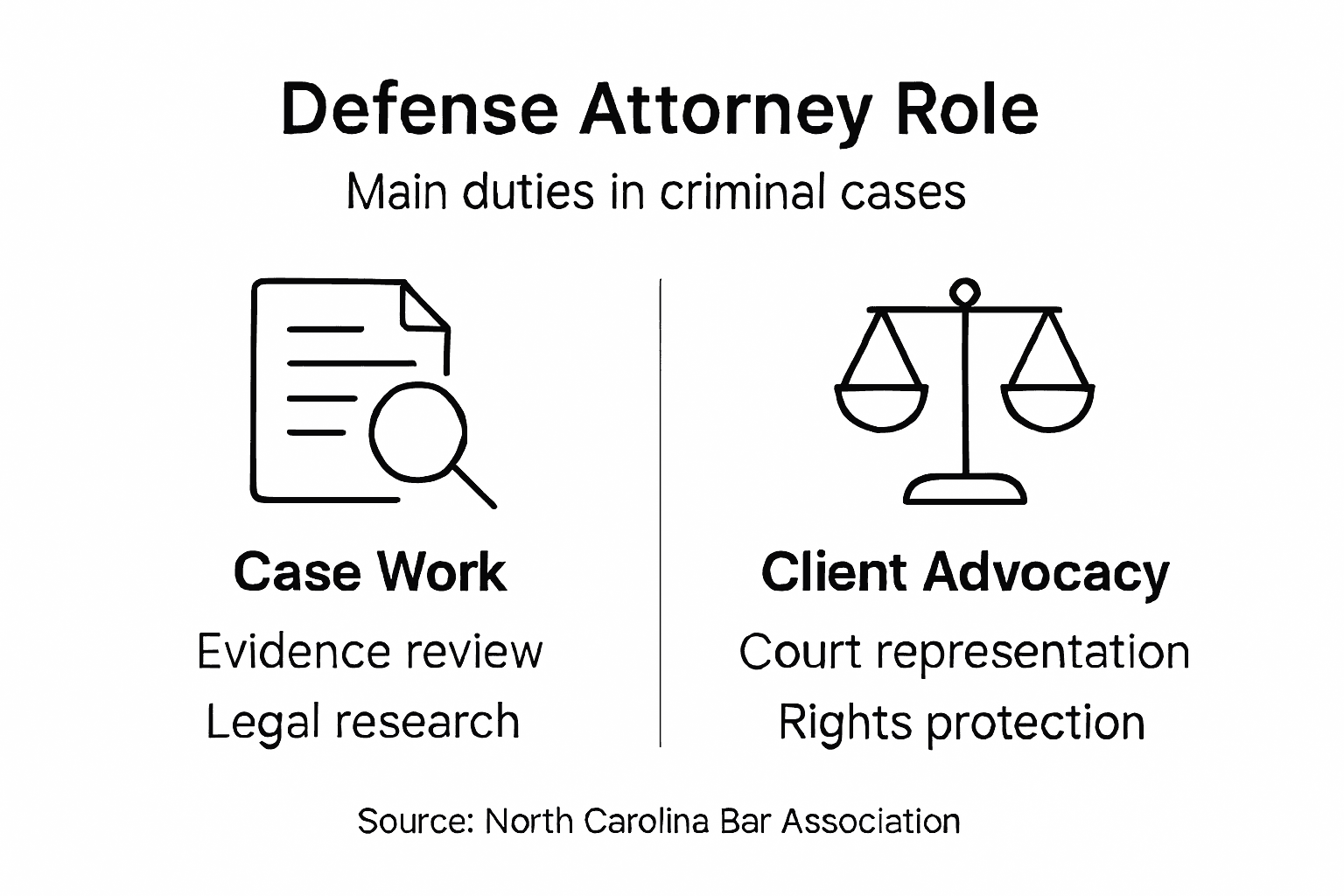
Criminal defense lawyers handle far more than just showing up in court. They defend clients by evaluating evidence, conducting thorough research, and forming defense strategies tailored to your specific case. This preparation work is invisible to most people but absolutely critical.
Your Defense Attorney’s Core Responsibilities
Your defense attorney wears many hats during your case:
- Investigating the charges against you thoroughly and independently
- Reviewing evidence the prosecution intends to use against you
- Cross-examining witnesses to challenge their credibility and accuracy
- Negotiating with prosecutors to potentially reduce charges or penalties
- Presenting your defense in court with evidence and legal arguments
- Protecting your constitutional rights at every stage of the process
Your attorney’s job is not to judge you—it’s to ensure you receive fair treatment under the law, regardless of the charges against you.
When facing criminal charges in western North Carolina, you have two primary types of criminal defense attorneys available. Public defenders are employed by the state and handle cases for individuals who cannot afford private representation. Private defense attorneys, like those at King & Rowe, are hired directly by clients and can provide more personalized attention and resources.
The choice between these options depends on your financial situation and case complexity. A private defense attorney typically has more time to dedicate to your case and deeper knowledge of local Hickory, Newton, and regional court systems.
Here’s a summary comparing public defenders and private criminal defense attorneys:
| Attribute | Public Defender | Private Attorney |
|---|---|---|
| Funding Source | State-funded | Client-funded |
| Caseload Size | High caseload | Fewer cases per attorney |
| Attention to Case | Limited time per client | More personalized focus |
| Local Knowledge | Varies by assignment | Often deep knowledge of local courts |
| Resource Availability | Restricted resources | Access to expert witnesses and investigators |
Why This Matters in Your Community
Attorneys working in Catawba, Burke, and Caldwell counties understand the local judicial landscape. They know individual judges’ tendencies, how local prosecutors operate, and what strategies work in these specific courtrooms. This local expertise directly impacts your defense outcome.
Why hiring a defense attorney protects your rights goes beyond just having someone represent you—it means having an advocate who understands both the law and your community.
Your attorney communicates complex legal concepts in language you can understand, keeping you informed throughout the process. This transparency helps you make informed decisions about your case, whether that means accepting a plea agreement or proceeding to trial.
Pro tip: During your initial consultation, ask potential attorneys about their experience with cases similar to yours in your county—local track records matter more than general expertise.
Types of Criminal Cases and Legal Strategies
Criminal cases vary dramatically in nature, complexity, and consequences. Understanding the specific type of charge you face—whether DUI, theft, assault, or drug-related—is essential because each requires a tailored legal approach. Your defense strategy cannot be generic; it must align with the unique circumstances of your case.
Common Criminal Cases in North Carolina
The charges prosecuted in Catawba, Burke, and Caldwell counties span a wide range. Criminal law covers offenses including murder, assault, theft, fraud, and drug offenses, each carrying different penalties and requiring distinct defense approaches.
DUI and traffic violations are among the most common cases handled locally. These involve operating a vehicle under the influence of alcohol or drugs and often carry license suspension, fines, and potential jail time.
Property crimes include theft, burglary, and fraud. These cases often hinge on evidence quality and witness credibility, making thorough investigation critical.
Violent crimes such as assault and battery involve physical harm allegations. These typically demand extensive witness testimony and often benefit from expert analysis of the circumstances.
Drug offenses range from simple possession to distribution. North Carolina takes these seriously, and the amount involved can elevate charges significantly.
The specific charge you face determines which evidence matters most and which legal arguments will resonate with prosecutors and judges.
Why Strategy Matters for Your Case
Your attorney doesn’t use the same approach for every case. Legal strategies adapt based on the evidence available, the specific law violated, and procedural requirements in your county. What works brilliantly for one case may fail completely in another.
A DUI defense might focus on breathalyzer accuracy and proper police procedures. A theft case might challenge evidence chain-of-custody. An assault case might examine witness bias or self-defense claims. Key criminal defense strategies for North Carolina cases must account for local court practices and prosecutor tendencies.
Building Your Defense Plan
Effective defense requires several critical steps:
- Analyzing charges thoroughly to identify weaknesses in the prosecution’s case
- Investigating independently to uncover evidence favoring your defense
- Evaluating evidence quality including police procedures and witness reliability
- Negotiating strategically to potentially reduce charges or penalties
- Preparing for trial if plea negotiations don’t yield acceptable results
Your attorney considers both the strength of evidence against you and which defense strategies are most likely to succeed in your specific courthouse. Local knowledge matters tremendously here—judges in Hickory rule differently than those in Newton.
Pro tip: During your initial consultation, provide your attorney with every document you have about your case; thorough evidence review often reveals details that change the entire defense strategy.
North Carolina Laws and Legal Process
North Carolina’s criminal laws are not static. The state regularly updates its legal framework, and staying informed about these changes is critical when facing charges. Your defense strategy must account for current law, not outdated interpretations.
Recent Changes to North Carolina Criminal Law
North Carolina’s 2023 legislative session brought significant changes to criminal law and procedure. New legislation increased punishments for rioting and looting, repealed pistol purchase permits, and expanded offenses against public officials and utilities. The state also modified pretrial procedures and enhanced penalties for assaults on pregnant women, emergency personnel, and healthcare workers.
These changes matter directly to your case. A DUI arrest handled differently today than it was two years ago. Assault charges carry new sentencing considerations. Your attorney must understand these evolving rules to build an effective defense.
Understanding North Carolina’s Court System
The state operates a structured criminal justice system with specific procedures at each stage:
- Arrest and booking occurs when police detain you
- Initial appearance happens within 24 hours, where bail is set
- Discovery process allows your attorney to obtain prosecution evidence
- Plea negotiations can occur at any stage before trial
- Trial proceeds if no agreement is reached
- Sentencing follows conviction
Local courts in Hickory, Newton, and surrounding counties follow North Carolina General Assembly procedures, but local judges interpret them differently. Your attorney’s familiarity with your specific courthouse matters tremendously.
North Carolina’s laws continue to evolve, and outdated legal advice can severely damage your defense strategy.
Key Differences: Felonies vs. Misdemeanors
Charges fall into two major categories with vastly different consequences. Understanding what constitutes a felony versus a misdemeanor affects your rights, potential penalties, and defense approach.
Misdemeanors are less serious offenses tried in District Court, typically carrying sentences under one year. Felonies are serious crimes tried in Superior Court with potential sentences exceeding one year or even life imprisonment.
The difference in consequences alone justifies aggressive defense. A felony conviction affects employment, housing, voting rights, and professional licenses permanently. Your attorney must treat felony charges with maximum intensity.
To clarify charges and their consequences, here’s how misdemeanors and felonies differ in North Carolina:
| Charge Type | Court Level | Typical Sentence | Long-Term Impact |
|---|---|---|---|
| Misdemeanor | District Court | Under one year jail | Minimal effect on rights |
| Felony | Superior Court | Over one year prison or life | Major impact: voting, housing, employment |
Pretrial Procedures You’ll Navigate
Understanding the process helps you prepare mentally and strategically. North Carolina’s updated procedures include specific bail considerations and evidence disclosure requirements that protect your rights—if your attorney enforces them.
Your attorney must file proper motions to suppress evidence obtained illegally, challenge bail amounts, and demand timely discovery. Missing these procedural steps surrenders valuable leverage.
Pro tip: Ask your attorney about recent changes to North Carolina criminal law that specifically affect your charge type; prosecutors sometimes haven’t fully adapted to new procedures, creating opportunities for skilled defense.
Core Responsibilities and Client Advocacy
Your criminal defense attorney operates with a dual mission: zealously advocate for you while upholding the law’s integrity. This balance defines effective representation. Your attorney isn’t just a legal technician; they’re your advocate, advisor, and protector throughout the criminal justice process.
Investigating and Building Your Defense
Defense work begins long before trial. Your attorney’s core responsibilities include investigating charges thoroughly, gathering and analyzing evidence, and identifying weaknesses in the prosecution’s case.

This investigation work is painstaking. Your attorney examines police reports, interviews witnesses, reviews surveillance footage, and searches for evidence the prosecution overlooked. Many cases turn on details discovered during this phase—not courtroom drama.
Your attorney must be aggressive and thorough. They don’t simply accept the prosecution’s version of events. They test every claim, verify every fact, and challenge every assumption.
Protecting Your Constitutional Rights
The Fourth, Fifth, and Sixth Amendments protect you from government overreach. Your attorney ensures these protections mean something in your actual case.
Your attorney challenges unlawful searches and seizures, illegal interrogations, and procedural violations. A single procedural mistake—an improperly obtained confession or illegally searched vehicle—can eliminate the prosecution’s strongest evidence.
This protective work happens through filed motions and legal arguments. It’s not exciting, but it’s often decisive.
Advocating for Your Interests
Your attorney must communicate clearly throughout your case. Defense lawyers maintain client confidentiality and provide competent, diligent representation while guiding you through critical decisions.
Your attorney explains:
- Plea agreement options and realistic trial outcomes
- Evidence strengths and weaknesses in your case
- Testifying risks and benefits for your specific situation
- Sentencing implications of different outcomes
They offer honest counsel even when you don’t want to hear it. A good attorney tells you hard truths about your case, not comfortable lies.
Your attorney advocates fiercely for you while ensuring you understand the consequences of every decision you make.
Trial Preparation and Representation
If your case goes to trial, your attorney handles everything. They file pretrial motions, prepare witnesses, develop cross-examination strategies, and present evidence effectively to judges or juries.
This courtroom work flows directly from preparation. Trials aren’t won through clever words; they’re won through meticulous preparation and deep knowledge of evidence and procedure.
Pro tip: Ask your attorney to explain their investigation findings and strategy in detail; understanding the work done behind the scenes builds confidence and helps you make informed decisions about plea agreements or trial.
Risks, Costs, and Common Misconceptions
Criminal charges carry real consequences, and understanding the actual risks—not fictional ones from television—is essential. Many people facing charges labor under serious misconceptions that damage their cases. Clearing up these myths early can mean the difference between conviction and acquittal.
Understanding the Real Costs
Private criminal defense costs vary dramatically based on case complexity and charge severity. A DUI defense typically ranges from $1,500 to $5,000. Felony cases can cost $10,000 to $50,000 or more, depending on investigation needs and trial preparation required.
These costs reflect the actual work involved. Your attorney must investigate thoroughly, file motions, negotiate with prosecutors, and potentially prepare for trial. Cheap representation often means minimal investigation and weak advocacy.
If you cannot afford a private attorney, public defenders are available. However, public defenders often face significant challenges. Excessive caseloads impede public defenders’ ability to provide adequate representation, sometimes forcing them to triage cases rather than fully develop defenses.
This reality makes attorney selection critical for those who can afford private counsel.
Common Client Misconceptions
Misunderstanding the legal process leads clients to make poor decisions. Research reveals common client misconceptions about plea negotiations, potential outcomes, and legal risks.
Here are myths that damage cases:
- “I’ll just explain myself in court” — You likely won’t testify, and if you do, prosecutors will cross-examine aggressively
- “The evidence seems weak, so I’ll win” — Judges and juries often convict on circumstantial evidence
- “A plea deal means admitting guilt” — Technically yes, but it often results in better outcomes than trial
- “My attorney should guarantee victory” — No ethical attorney makes promises about outcomes
- “Going to trial is always better” — Trial risks are substantial; favorable plea agreements often make sense
Misconceptions about legal process and outcomes lead clients to reject reasonable plea agreements and face harsher sentences after trial conviction.
Managing Expectations Realistically
Your attorney should educate you about realistic outcomes in your specific case. This means honest assessment of evidence strength, witness credibility, and judge/jury tendencies in your courthouse.
Some cases are winneable at trial. Others are not. Your attorney’s job includes telling you which category your case falls into and why. This honesty feels harsh sometimes, but it prevents terrible decisions.
Effective communication means your attorney explains legal concepts clearly, discusses plea options thoroughly, and helps you understand the risks and benefits of trial versus settlement.
The Risks of Going to Trial
Trial outcomes are never guaranteed. Even with strong evidence, juries sometimes surprise attorneys. Judges sometimes rule unexpectedly on evidence questions. Witnesses sometimes perform poorly or change testimony.
Conviction at trial often means harsher sentences than plea agreements offer. Judges sometimes view trial defendants as refusing to take responsibility, leading to sentencing penalties.
Pro tip: Ask your attorney for honest assessment of trial win probability in your case, what conviction would mean for sentencing, and how any plea offer compares to trial risk—then make your decision based on this realistic information.
Protect Your Rights with Skilled Criminal Defense from King & Rowe
Facing criminal charges can feel overwhelming especially when your future and freedoms are at stake The article highlights crucial challenges like navigating complex local court systems protecting your constitutional rights and responding to evolving North Carolina laws These pain points mean you need more than a lawyer You need an advocate who understands the nuances of Catawba Burke and Caldwell counties and will fight aggressively for your best outcome
King & Rowe offers experienced criminal defense tailored to your unique case Whether you face DUI or serious felony charges our attorneys combine deep local knowledge with personalized strategies to challenge evidence negotiate effectively and protect your rights at every stage of the legal process

Don’t leave your defense to chance or overworked public defenders Take control now by contacting King & Rowe Our team will guide you through this difficult time with transparency respect and proven results Start your defense with attorneys who truly understand your situation and community Visit us today at https://www.kingrowelaw.com/ to schedule a consultation and secure your future
Frequently Asked Questions
What are the main responsibilities of a criminal defense attorney?
A criminal defense attorney is responsible for investigating charges, reviewing evidence, negotiating with prosecutors, presenting defenses in court, and protecting your constitutional rights throughout the legal process.
How does having a private defense attorney differ from having a public defender?
Private defense attorneys typically handle fewer cases, offering more personalized attention and resources. In contrast, public defenders are state-funded and often have high caseloads, which can limit the time they can dedicate to individual clients.
What types of criminal cases do defense attorneys handle?
Defense attorneys handle a wide range of criminal cases, including DUIs, theft, assault, drug offenses, and violent crimes. Each type of case requires a tailored legal strategy based on the specific charges and evidence involved.
What should I consider when choosing a criminal defense attorney?
When choosing a criminal defense attorney, consider their experience with cases similar to yours, their familiarity with local courts, and their communication style. During initial consultations, ask about their approach and past outcomes to gauge their suitability for your case.
Contact King & Rowe Attorneys at Law
 Serving Hickory, NC and surrounding communities
 Phone: 828-466-3858
 Email: kingrowelaw@gmail.com
 Website: www.kingrowelaw.com
Recommended
- Role of Judge in Criminal Cases: Local Impact for Defense
- Why Hire a Defense Attorney: Protect Your Rights
- 5 things to look for in hiring a Defense Lawyer – Hickory Attorneys for Family Law, Criminal Defense, & Estate Planning | King & Rowe
- 7 Key Criminal Defense Strategies for North Carolina Cases
- Criminal Record Screening: Ensuring Public Safety Integrity