Many people assume court-appointed attorneys provide inferior representation compared to private lawyers, but this belief overlooks the critical constitutional protections these legal professionals uphold. Court-appointed attorneys serve as essential defenders of justice for individuals who cannot afford private counsel, handling everything from serious criminal charges to complex family law disputes across western North Carolina. Understanding who these attorneys are, how they operate, and what they can do for you helps demystify the legal system and ensures you receive the full protection of your rights when facing criminal or family law challenges.
Table of Contents
- What Court-Appointed Attorneys Do And Who They Serve
- The Impact Of Caseloads And Resources On Attorney Effectiveness
- Special Roles Of Court-Appointed Attorneys In Juvenile And Family Law Cases
- How To Find And Work Effectively With A Court-Appointed Attorney In Western North Carolina
- Get Experienced Legal Support In Western North Carolina
- Frequently Asked Questions
Key takeaways
| Point | Details |
|---|---|
| Constitutional guarantee | Court-appointed attorneys ensure your Sixth Amendment right to legal representation regardless of financial status. |
| Broad case coverage | They handle criminal defense, family law matters, and juvenile cases throughout western North Carolina counties. |
| Quality factors | Caseload size, experience level, and available resources directly impact the effectiveness of your representation. |
| Eligibility criteria | Income and asset limits determine qualification, with local courts assessing your financial situation. |
| Client responsibilities | Open communication and prompt information sharing strengthen your working relationship with assigned counsel. |
What court-appointed attorneys do and who they serve
Court-appointed attorneys function as your legal advocates when you face serious charges or family law proceedings but lack the financial means to hire private representation. These lawyers handle criminal defense and family law matters for eligible individuals based on income, ensuring constitutional protections reach everyone regardless of economic status. In western North Carolina, these attorneys work extensively in counties like Catawba, Burke, and Caldwell, representing clients in local and district courts.
The scope of cases handled by court-appointed attorneys extends far beyond simple misdemeanors. They defend clients facing felony charges, DUI/DWI accusations, domestic violence allegations, and drug-related offenses. In family law contexts, these attorneys advocate for parents in child custody disputes, represent parties in abuse and neglect proceedings, and assist with termination of parental rights cases. Court-appointed attorneys in Watauga County exemplify this comprehensive approach, serving clients across multiple legal domains.
Eligibility for court-appointed representation typically hinges on demonstrating financial need through income verification and asset disclosure. Courts use standardized guidelines to assess whether your financial situation qualifies you for indigent defense services. The determination process considers household income, dependents, existing debts, and available assets to ensure services reach those genuinely unable to afford private counsel.
Once assigned, your court-appointed attorney assumes the same professional responsibilities as any private lawyer. They conduct thorough case investigations, interview witnesses, review evidence, research applicable laws, and negotiate with prosecutors or opposing counsel. During court proceedings, they present arguments, cross-examine witnesses, file necessary motions, and advocate vigorously for your interests. Understanding the role of an attorney in family law helps clarify these responsibilities in domestic cases.
The fundamental duties of court-appointed attorneys include:
- Protecting your constitutional rights throughout legal proceedings
- Providing confidential legal advice tailored to your specific situation
- Developing defense strategies or case theories based on evidence and law
- Representing you during hearings, trials, and settlement negotiations
- Ensuring procedural fairness and challenging improper evidence or testimony
These professionals serve a vital function in the justice system by leveling the playing field between the state and individuals who would otherwise face legal proceedings without professional guidance. Their work ensures that financial limitations do not result in wrongful convictions, unfair custody arrangements, or violations of due process. Recognizing why you should hire a defense attorney underscores the value these court-appointed professionals provide when private representation remains out of reach.
The impact of caseloads and resources on attorney effectiveness
The quality of representation you receive from a court-appointed attorney depends significantly on factors beyond their legal knowledge and courtroom skills. Excessive caseloads represent one of the most serious challenges facing public defenders and court-appointed lawyers nationwide. When attorneys juggle dozens or even hundreds of cases simultaneously, high caseloads negatively impact representation quality by limiting time available for client meetings, investigation, and case preparation.
Attorney experience also shapes case outcomes in meaningful ways. Seasoned lawyers bring institutional knowledge of local courts, established relationships with prosecutors and judges, and refined litigation skills developed through years of practice. Newer attorneys may possess strong legal training but lack the practical courtroom experience that helps navigate complex procedural issues or negotiate favorable plea agreements. This experience gap can affect everything from bail hearings to trial strategy.
Resource limitations create additional obstacles for court-appointed attorneys seeking to build robust defenses. Unlike well-funded private firms, indigent defense systems often operate on tight budgets that restrict access to expert witnesses, forensic specialists, and private investigators. These resources can prove critical in cases requiring technical testimony, scientific evidence analysis, or witness location services. When attorneys cannot access these tools, they may struggle to challenge prosecution evidence effectively or present alternative theories.

Caseload limits recommended by NACDL and ABA provide benchmarks for effective representation, but many jurisdictions exceed these standards due to funding constraints and attorney shortages. The National Association of Criminal Defense Lawyers suggests maximum annual caseloads of 150 felonies, 400 misdemeanors, or 200 juvenile cases per attorney. Exceeding these limits increases the risk of inadequate investigation, missed filing deadlines, and insufficient client communication.
| Factor | Impact on Representation | Recommended Standard |
|---|---|---|
| Annual felony caseload | More than 150 cases reduces investigation time | Maximum 150 felonies per attorney |
| Misdemeanor cases | Over 400 cases limits court preparation | Maximum 400 misdemeanors annually |
| Support staff ratio | Insufficient paralegals increase attorney workload | One paralegal per two attorneys |
| Investigation budget | Limited funds restrict expert witness access | Adequate funding for case needs |
Improving indigent defense quality requires systemic changes including increased funding, reasonable caseload caps, competitive attorney compensation, and adequate support resources. Some jurisdictions have implemented reforms such as vertical representation models where one attorney handles a case from arraignment through appeal, fostering stronger attorney relationships and case continuity. Others have established performance standards and oversight mechanisms to monitor representation quality.
Pro Tip: Ask your court-appointed attorney about their current caseload and available resources early in your case. Understanding their capacity helps you set realistic expectations and identify areas where you might need to assist with information gathering or witness coordination.
The connection between resources and outcomes extends beyond individual cases to affect entire communities. When indigent defense systems lack adequate funding, delays multiply, jail populations increase, and wrongful convictions become more likely. Recognizing the importance of attorney quality emphasizes why these systemic issues matter for anyone relying on court-appointed representation.
Special roles of court-appointed attorneys in juvenile and family law cases
Court-appointed attorneys play particularly critical roles in juvenile delinquency and child welfare proceedings where the stakes involve not just legal penalties but family relationships and child safety. In North Carolina, court-appointed attorneys ensure fairness and protect constitutional rights while working to place juveniles in safe, permanent homes when returning home is not in their best interest. These specialized cases require attorneys who understand both criminal procedure and family law principles.
Juvenile defense attorneys advocate for young clients facing delinquency charges, ensuring they understand court proceedings and receive age-appropriate legal counsel. They challenge evidence, negotiate with prosecutors, and present mitigating factors that might warrant rehabilitation rather than punishment. Beyond courtroom advocacy, these attorneys help juveniles access educational services, mental health treatment, and community programs that address underlying issues contributing to delinquent behavior.
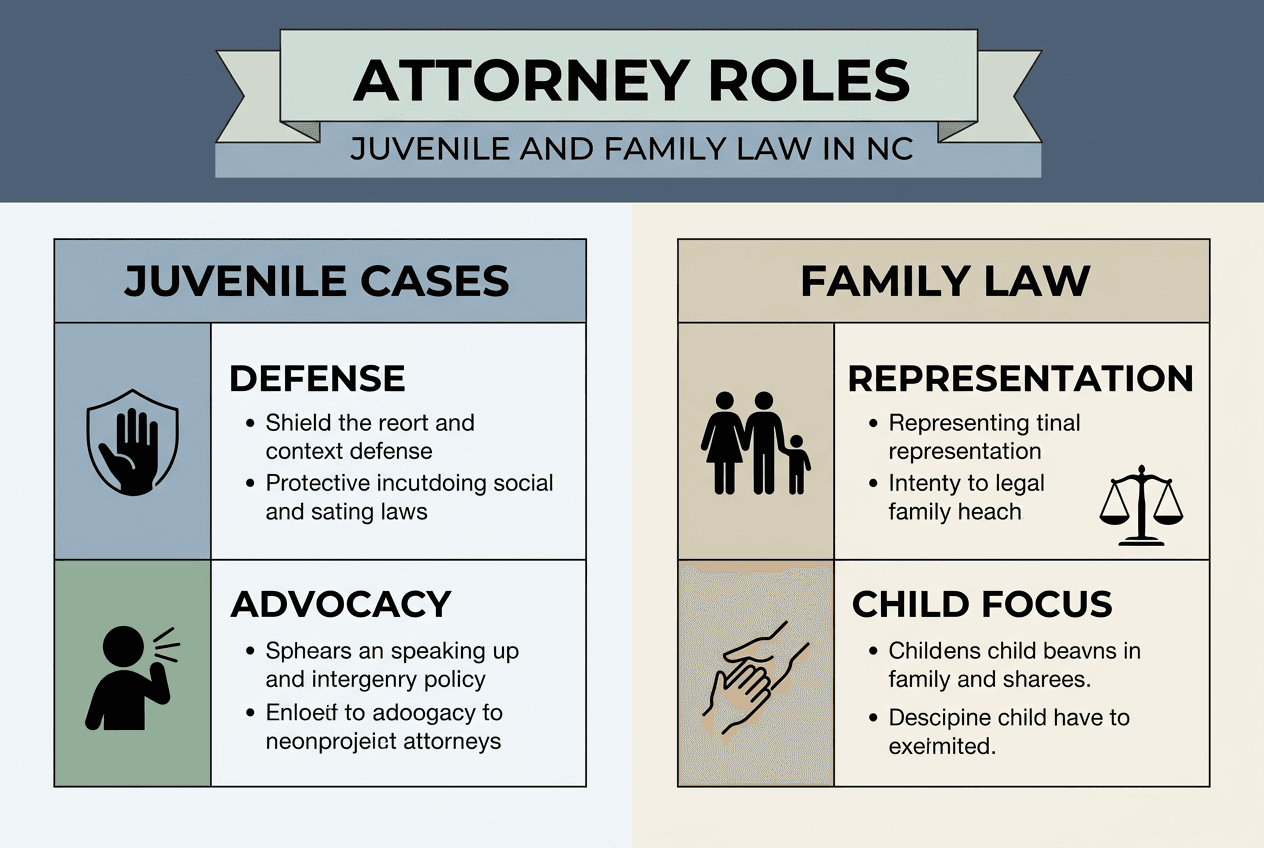
In child welfare cases, court-appointed attorneys may represent parents, children, or guardians ad litem depending on the proceeding type. Parent attorneys defend against abuse and neglect allegations, challenge removal decisions, and advocate for reunification services. Child attorneys voice their client’s preferences and protect their legal interests throughout dependency proceedings. This multi-party representation ensures all perspectives receive consideration in decisions affecting family structure.
Timely legal representation in child welfare cases prevents prolonged stays in temporary foster care, which research shows can harm children’s emotional development and educational stability. When attorneys effectively advocate for permanent placements, whether through reunification, guardianship, or adoption, children gain the stability necessary for healthy development. Delays caused by attorney shortages or inadequate representation extend uncertainty and trauma for vulnerable children.
Funding challenges significantly impact attorney participation in child welfare cases. Low attorney pay in child welfare cases reduces the number of lawyers willing to accept these appointments, causing delays in permanent placements. Compensation rates in some North Carolina counties remain far below private sector rates, making it difficult to attract experienced family law practitioners to indigent defense work.
Effective advocacy in juvenile and family cases requires:
- Understanding developmental psychology and age-appropriate communication techniques
- Knowledge of child welfare laws, permanency timelines, and available services
- Ability to coordinate with social workers, therapists, and educational professionals
- Skills in negotiating family service plans and reunification agreements
- Commitment to maintaining confidentiality while advocating for client interests
| Case Type | Attorney Role | Primary Goal |
|---|---|---|
| Juvenile delinquency | Defend against charges and advocate for rehabilitation | Minimize legal consequences while addressing underlying issues |
| Abuse and neglect | Represent parent, child, or guardian interests | Ensure child safety and work toward permanent placement |
| Termination of parental rights | Advocate for or against termination based on client | Protect constitutional rights and promote child welfare |
| Custody disputes | Represent parent in contested custody matters | Achieve custody arrangement serving child’s best interests |
Pro Tip: If you’re involved in a child welfare case, maintain regular contact with your court-appointed attorney and promptly complete any court-ordered services or evaluations. Demonstrating cooperation and progress significantly strengthens your position in reunification efforts.
Court-appointed attorneys in these sensitive cases must balance legal advocacy with genuine concern for child welfare outcomes. They navigate emotionally charged situations while maintaining professional objectivity and legal expertise. Understanding child custody legal guidance and emergency custody procedures helps parents appreciate the complexity these attorneys manage in family law proceedings.
How to find and work effectively with a court-appointed attorney in western North Carolina
Navigating the court-appointed attorney system starts with understanding the assignment process in your jurisdiction. Courts assign attorneys based on local appointment plans that establish rotation systems, qualification requirements, and case distribution methods. In western North Carolina counties, the District Appointment Plan explains attorney assignment procedures and eligibility criteria that determine who receives court-appointed representation.
Once the court appoints an attorney to your case, you can verify their credentials and contact information through the North Carolina Bar attorney search portal. This online database provides license status, practice areas, and disciplinary history for all attorneys licensed in North Carolina. Local court clerks can also provide contact information for your assigned attorney and answer questions about appointment procedures.
Building a productive working relationship with your court-appointed attorney requires active participation and open communication. Share all relevant information about your case promptly, even details you think might be unfavorable. Attorneys cannot develop effective strategies without complete facts. Withholding information often leads to courtroom surprises that undermine your defense or legal position.
Effective collaboration strategies include:
- Attending all scheduled meetings and court appearances on time
- Preparing written summaries of events, timelines, and witness information
- Asking questions when you don’t understand legal terminology or procedures
- Following your attorney’s advice regarding court conduct and communication
- Keeping your attorney informed of address changes or contact information updates
Understanding the scope and limitations of court-appointed representation helps manage expectations. While these attorneys provide competent legal services, they may have limited time for non-essential consultations due to heavy caseloads. Focus your communications on case-critical matters and respect their time constraints. If you need frequent updates or have complex questions, request scheduled phone calls rather than expecting immediate responses.
Pro Tip: Document all interactions with your court-appointed attorney including meeting dates, topics discussed, and advice received. This record helps you track case progress and provides reference material if questions arise about representation quality or attorney communications.
Your responsibilities as a client extend beyond information sharing to include honest communication about your goals and concerns. Tell your attorney what outcomes matter most to you, whether that means avoiding jail time, maintaining custody of your children, or protecting your employment. Clear goal-setting allows attorneys to prioritize strategies aligned with your priorities.
If you encounter difficulties reaching your attorney or have concerns about case handling, address these issues promptly through appropriate channels. Contact the court-appointed attorney’s office directly first, explaining your concerns and requesting improved communication. If problems persist, you may need to inform the court or indigent defense administrator about representation issues. Understanding what happens if you miss court dates and the bail process helps you navigate criminal proceedings more effectively with your attorney’s guidance.
Get experienced legal support in western North Carolina
While court-appointed attorneys provide essential services for eligible individuals, some legal situations benefit from the dedicated attention and resources that private counsel offers. King & Rowe brings over a decade of experience serving clients throughout western North Carolina with personalized legal strategies in family law, criminal defense, and estate planning. Our attorneys understand the local court systems in Catawba, Burke, and Caldwell counties, maintaining relationships with judges and prosecutors that facilitate effective advocacy.
Whether you’re navigating a complex divorce and family law matter, defending against criminal charges, or planning your legacy through estate planning services, our team provides the focused representation that protects your rights and achieves favorable outcomes. We’ve successfully resolved over 1,500 cases by combining legal expertise with genuine commitment to client success. If you’re facing legal challenges and want experienced counsel who will prioritize your case, contact King & Rowe to discuss how we can help. Our consultation process explores your situation, explains your options, and develops strategies tailored to your specific needs and goals. Learn more about protecting your family’s future with comprehensive will preparation services or schedule a consultation to discuss your legal matter today.
Frequently asked questions
What is the difference between a court-appointed attorney and a public defender?
A public defender works as a full-time government employee dedicated exclusively to representing indigent defendants in criminal cases. Court-appointed attorneys may be private practitioners who accept individual case assignments from the court to represent clients who cannot afford counsel. Both provide legal defense for financially eligible individuals, but public defenders typically handle higher case volumes within a structured office environment while court-appointed private attorneys balance these cases with their regular practice.
How do I know if I qualify for a court-appointed attorney in western North Carolina?
Qualification depends on income and assets guidelines established by your jurisdiction, along with the nature of your legal matter. Courts assess your household income, dependents, debts, and available resources to determine financial eligibility. Contact your local court clerk or the indigent defense office in your county for specific income thresholds and application procedures. Most jurisdictions require financial affidavits documenting your economic situation before appointing counsel.
Can court-appointed attorneys refuse to take my case?
Attorneys may decline appointments in certain situations, but courts generally ensure you receive representation by assigning another qualified lawyer from the appointment list. Low pay and high caseloads sometimes limit attorney availability for specific case types, particularly in child welfare matters. If you believe your representation is inadequate or your attorney seeks to withdraw, you have the right to raise these concerns with the court, which will evaluate whether appointment of new counsel is warranted.
What should I do if I have concerns about my court-appointed attorney’s performance?
Communicate your specific concerns directly with your attorney first, as many issues stem from misunderstandings about case strategy or procedural requirements. If direct communication doesn’t resolve your concerns, inform the court or indigent defense administrator in writing, detailing the representation problems you’ve experienced. Performance standards for court-appointed attorneys exist to ensure effective assistance of counsel, and demonstrated failures may justify requesting new representation or raising ineffective assistance claims on appeal.
Recommended
- 7 Key Criminal Defense Best Practices for NC Residents
- Why Hire a Defense Attorney: Protect Your Rights
- 7 Key Criminal Defense Strategies for North Carolina Cases
- What Happens If You Can’t Make Bail in North Carolina? – Hickory Attorneys for Family Law, Criminal Defense, & Estate Planning | King & Rowe